
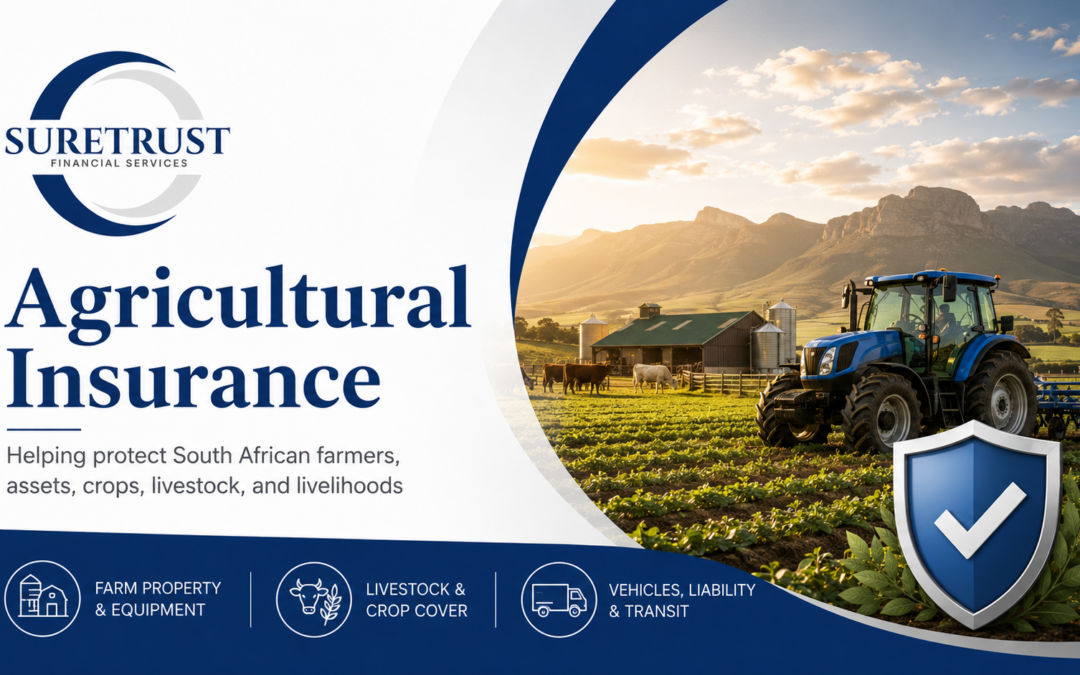
What Types of Agricultural Insurance Are Available to Farmers in South Africa?
Short answer: Agricultural insurance for farmers in South Africa can include cover for farm buildings, farm contents, machinery, equipment, irrigation systems, vehicles, livestock, crops, goods in transit, public liability, employer’s liability, fire, theft, storm damage, and business interruption. The right type of cover depends on the farm’s size, location, farming activities, assets, crops, animals, vehicles, and risk exposure. Because every farm operates differently, agricultural insurance should be structured around the farmer’s real working environment and financial risks.
What Is Agricultural Insurance?
Agricultural insurance is specialised short-term insurance designed to protect farmers, farming businesses, and agricultural operations against risks that may affect their assets, income, operations, livestock, crops, equipment, vehicles, and legal responsibilities.
Farming is not the same as a standard business. A farm may include a home, workers, livestock, crops, machinery, vehicles, fuel, tools, boreholes, fences, sheds, irrigation equipment, produce, and stock moving between locations. This means agricultural insurance often needs to combine several types of cover into one practical insurance plan.
In South Africa, agricultural insurance can support commercial farmers, small-scale farmers, livestock farmers, crop farmers, mixed farming operations, game farms, wine farms, poultry producers, dairy farms, fruit farms, and agricultural service providers.
Simple example: A livestock farmer may need cover for animals, farm vehicles, fences, liability, fire, theft, and farm buildings. A crop farmer may need cover for hail, fire, irrigation equipment, machinery, harvest risks, and goods in transit. The correct cover depends on the actual farm.
What Types of Agricultural Insurance Are Available?
Farmers in South Africa can consider several types of agricultural insurance depending on the nature of the farming operation. The exact cover will depend on the insurer, policy wording, selected benefits, exclusions, limits, and risk requirements.
- Farm property insurance: This can protect farm buildings, sheds, stores, workshops, barns, offices, packhouses, worker housing, and other fixed structures against insured events such as fire, storm damage, theft, impact, or malicious damage.
- Farm contents insurance: This may cover items kept on the farm, including tools, office equipment, furniture, appliances, supplies, and other moveable contents used in the farming operation.
- Machinery and equipment insurance: Farmers can insure tractors, harvesters, balers, planters, generators, pumps, compressors, tools, and other farming equipment against certain accidental damage, theft, fire, or breakdown-related risks.
- Irrigation and water system cover: This may include irrigation pivots, pumps, pipes, boreholes, reservoirs, tanks, windmills, and water infrastructure that are essential to daily farming operations.
- Crop insurance: Crop cover may protect against risks such as hail, fire, frost, storm damage, flood, lightning, or other insured weather-related events, depending on the crop type and policy selected.
- Livestock insurance: This can help protect cattle, sheep, goats, game, poultry, pigs, or other livestock against selected risks such as death, theft, disease, accident, fire, or specific insured events.
- Farm vehicle insurance: This may cover bakkies, trucks, trailers, tractors used on roads, delivery vehicles, and other farm vehicles against accident damage, theft, fire, hijacking, or third-party liability.
- Goods in transit insurance: This can protect produce, livestock, feed, equipment, stock, or agricultural goods while being transported between farms, markets, suppliers, buyers, or storage locations.
- Public liability insurance: This can protect the farmer if a third party suffers injury, loss, or property damage linked to the farm’s activities.
- Employer’s liability insurance: This may provide cover for certain claims related to employees, workers, or labour-related injury risks, depending on the policy and legal requirements.
- Fire insurance: Fire cover is important for many farms because fire can damage grazing, crops, buildings, fences, machinery, feed, livestock, and neighbouring property.
- Theft and burglary cover: Farms may need cover for theft of equipment, tools, fuel, stock, livestock, machinery parts, irrigation components, or other assets.
- Business interruption cover: If an insured event stops or reduces farming operations, this cover may assist with loss of income, fixed expenses, or recovery costs.
- Personal insurance for farmers: Farmers may also need cover for their personal home, household contents, private vehicles, and personal liability as part of a broader insurance plan.
- Specialised farming cover: Certain farms may require specialised insurance for poultry, game, wine cellars, cold storage, tunnels, packhouses, exports, product liability, or farming operations with unique risks.
Agricultural Implement and Farm Building Cover
Agricultural implement and farm building cover protects two of the biggest investments on most farms. Implement cover can include tractors, planters, harvesters, sprayers, trailers and other machinery against insured events such as fire, theft and accidental damage, depending on the policy. Farm building cover can protect sheds, barns, stores, workshops, packhouses and worker housing against events such as fire, storm and lightning.
Cover, limits and excesses differ between insurers, so it is important to list every implement and building at its correct value. Suretrust can help you put together agricultural insurance that fits your farm.
What Does Agricultural Insurance Usually Cover?
Agricultural insurance is usually built around the farm’s operational risks. Depending on the policy, it may include protection for physical assets, animals, crops, vehicles, liability, produce, equipment, and financial loss after an insured event.
Farm assets
- Farm buildings and structures
- Fences, gates, reservoirs, tanks, and boreholes
- Tools, equipment, and workshop contents
- Machinery and farming implements
- Irrigation systems and pumps
- Stock, feed, fertiliser, and supplies
Farm operations
- Crop-related risks
- Livestock-related risks
- Farm vehicle risks
- Goods in transit risks
- Public and employer’s liability
- Business interruption after an insured loss
The correct agricultural insurance plan should reflect how the farm actually works, what the farmer owns, what is transported, what is produced, where the farm is located, and what could cause financial loss.
What Is Usually Not Covered?
Agricultural insurance does not automatically cover every loss. Exclusions and conditions differ from one insurer to another, which is why farmers should understand their policy before a claim happens.
- Wear and tear: Normal ageing, rust, corrosion, mechanical wear, gradual deterioration, and expected maintenance issues are usually not covered.
- Poor maintenance: Damage caused by neglect, poor repairs, lack of servicing, or failure to maintain equipment, buildings, fences, or machinery may be excluded.
- Uninsured events: If a specific risk is not listed or included in the policy, it may not be covered.
- Underinsurance: If farm assets, crops, machinery, or livestock are insured for less than their true value, the farmer may not receive the full claim amount.
- Intentional damage: Deliberate damage caused by the insured party or people acting on their behalf is generally not covered.
- Policy condition breaches: Claims may be affected if security, firebreak, maintenance, tracking, storage, or safety requirements were not followed.
- Certain animal diseases: Livestock disease cover can be limited and may require specific extensions, veterinary records, or compliance with policy conditions.
- Crop losses outside selected cover: Crop insurance may only cover selected perils, such as hail or fire, unless broader cover has been arranged.
- Loss of income without business interruption cover: Physical asset cover may not automatically cover the income lost after an insured event.
- Unspecified high-value items: Certain items may need to be specifically listed or insured separately.
Who Needs Agricultural Insurance?
Agricultural insurance is suitable for farmers and farming businesses that would suffer financially if assets, animals, crops, vehicles, equipment, produce, or operations were damaged, stolen, destroyed, or interrupted.
Farmers who may need cover
- Commercial farmers
- Small and medium-sized farmers
- Livestock farmers
- Crop farmers
- Mixed farming operations
- Dairy farmers
- Poultry farmers
- Game farmers
Farming operations with exposure
- Farms with machinery or implements
- Farms with vehicles or trailers
- Farms transporting produce or livestock
- Farms employing workers
- Farms with visitors, contractors, or clients
- Farms with irrigation systems
- Farms with valuable stock or feed
- Farms exposed to fire, theft, storm, or hail
A farmer should consider agricultural insurance if one unexpected event could affect the farm’s ability to operate, produce, deliver, employ workers, repay debt, or continue trading.
Why Agricultural Insurance Matters in South Africa
Farming in South Africa carries unique and serious risks. Farmers face unpredictable weather, fire, theft, livestock disease, rising input costs, equipment damage, transport risks, liability exposure, and pressure on cash flow. A single incident can affect the farm’s production, income, employees, customers, and long-term sustainability.
South African farms also differ widely by region and farming type. A maize farmer in the Free State, a cattle farmer in the Karoo, a citrus farmer in Limpopo, a dairy farmer in the Eastern Cape, a wine farmer in the Western Cape, and a mixed farmer near Bloemfontein may all need very different insurance solutions.
- Fire can damage grazing, fences, buildings, equipment, crops, and neighbouring property.
- Hail and storms can affect crops, roofs, equipment, tunnels, vehicles, and harvest quality.
- Theft can involve tools, diesel, irrigation parts, livestock, machinery parts, and farm stock.
- Vehicle accidents can affect deliveries, transport, farm access, and produce movement.
- Liability claims can arise from injuries, property damage, visitors, workers, contractors, or farm operations.
- Equipment damage can delay planting, harvesting, irrigation, feeding, or production.
- Business interruption can place pressure on cash flow after a major insured event.
Agricultural insurance matters because farming is not only about assets; it is about livelihood, continuity, food production, workers, families, and long-term sustainability.
How to Choose the Right Agricultural Insurance
The best agricultural insurance plan starts with understanding the farm properly. A farmer should avoid choosing cover only based on price, because the cheapest policy may leave important gaps.
When reviewing agricultural insurance, farmers should consider:
- The type of farming operation
- The value of farm buildings and structures
- The replacement value of machinery and equipment
- The value of livestock, crops, feed, fuel, and stock
- The number and use of farm vehicles
- Whether goods, livestock, or produce are transported
- Whether workers, contractors, visitors, or customers come onto the farm
- Regional risks such as hail, fire, storms, theft, or drought-related exposure
- Policy exclusions, excesses, conditions, and insured limits
- Whether business interruption cover is needed
Important: Farmers should regularly update their insurance values. Machinery, livestock, equipment, building costs, and input costs can change, which may leave a farm underinsured if the policy is not reviewed.
How Suretrust Can Help
Suretrust helps South African farmers understand and structure agricultural insurance around the real risks of their farming operation. Based in Bainsvlei, Bloemfontein, Suretrust works with farmers, families, business owners, transport operators, and commercial clients across South Africa.
Suretrust can assist with reviewing your farm risks, identifying gaps in your current cover, comparing suitable agricultural insurance options, explaining policy conditions, and structuring cover for farm property, machinery, equipment, vehicles, crops, livestock, goods in transit, liability, and personal insurance needs.
The right agricultural insurance should protect more than individual items. It should support the farm’s ability to recover, continue operating, and protect the livelihood that has been built over time.
Frequently Asked Questions
What is agricultural insurance?
Agricultural insurance is specialised short-term insurance designed to protect farmers and farming businesses against risks affecting farm property, machinery, crops, livestock, vehicles, goods in transit, liability, and farming operations.
What types of agricultural insurance are available in South Africa?
Farmers in South Africa can consider farm property insurance, contents cover, machinery and equipment cover, irrigation system cover, crop insurance, livestock insurance, farm vehicle insurance, goods in transit insurance, public liability, employer’s liability, fire cover, theft cover, and business interruption cover.
Does agricultural insurance cover crops?
Agricultural insurance may include crop cover for selected risks such as hail, fire, frost, storm damage, flood, lightning, or other insured events. Crop cover depends on the crop type, location, insurer, selected policy, and policy wording.
Does agricultural insurance cover livestock?
Livestock insurance may cover selected risks affecting cattle, sheep, goats, poultry, game, pigs, or other animals. Cover may relate to death, theft, disease, accident, fire, or other insured events, depending on the policy wording and exclusions.
Are tractors and farm machinery covered?
Tractors, harvesters, implements, pumps, generators, tools, and other machinery may be covered under machinery, equipment, or farm asset insurance. The policy should reflect the correct replacement value and use of each item.
Does agricultural insurance include goods in transit?
Goods in transit is not always automatically included. Farmers who transport produce, livestock, feed, stock, equipment, or agricultural goods should check whether goods in transit cover has been added to their policy.
What is usually not covered by agricultural insurance?
Common exclusions may include wear and tear, poor maintenance, underinsurance, uninsured events, intentional damage, policy condition breaches, certain diseases, crop losses outside selected cover, and loss of income without business interruption cover.
How can Suretrust help farmers with agricultural insurance?
Suretrust can help farmers review their risks, understand agricultural insurance options, identify gaps in cover, compare suitable policies, explain policy wording, and structure insurance for farm property, machinery, equipment, vehicles, crops, livestock, goods in transit, liability, and personal insurance needs.
Important disclaimer: This article is for general information only and does not replace personalised financial or insurance advice. Cover, exclusions, limits, excesses, and conditions depend on the insurer and policy wording. Always speak to a qualified insurance adviser before making insurance decisions.